Showing posts with label egypt. Show all posts

Monday, November 16, 2009

The Universal Music System (patent pending)


Our minds develop from the information we gain through our senses. Since our sense use the natural language, then the development of our mind is dependent upon the natural language. Our perception and interpretation of all things is based on the natural language. The goal of metaphysics is to knowledgeably unify the developments in our mind, with the natural structures of our senses, and the natural structures found in the physical universe. We then have a clear path to follow. If we want to truly understand these connections we will need to do more than simply think about the relationships - we will need to experience them. This is where music metaphysics shines. The study of the metaphysics of music allows the individual to physically experience the natural structures of the natural language and gain new insights and meaning.
The most fundamental element of music metaphysics is its language. The proper music language must perfectly describe the natural language found in our senses and in our sensory developed minds. It must be properly tuned to the natural structures upon which the material and spiritual world are formed. If the language is not so tuned, the metaphysic experience will be greatly diminished for, although we may be able to appreciate music, we will not be able to understand it, and we will not be able to receive the full mind, body, spirit effect.
The first step in developing the natural music language is to understand that music is a system of sound frequencies which are fundamentally described by numbers. If we hit a piano key, the key moves a lever which hits a string inside the piano. The string vibrates at a fundamental frequency we might arbitrarily call 1. As it naturally vibrates it naturally produces a frequency we would then call 2. If the first note we played was called ‘C’, then the frequency we called 2 will also be called ‘C’. This is a first principle of the music language called identity. Each multiple of 2 is recognized as an identity of the fundamental 1. So, in order to properly identify this property of identity, we form a musical staff and a keyboard that reflects this property of identity. On the staff we mark octaves as octave 1, octave 2, 3, 4, 5, and so on. Next to the octave number, we can place a design with a short line running through it to identify an octave note. Since we perceive each octave as a perceptually equal step, then we separate the octaves by visually equal amounts.
The next step is to identify the natural musical tones. It turns out that the natural language defines unique musical tones by multiples of the number 3. If we begin with 1 and continue to multiply by 3’s we will generate 12 unique tones before we repeat the first tone at the 12th multiple of 3. Thus there are 12 fundamental tones.
How are we going to identify the 12 fundamental tones? We could identify them by number, but numbers easily get complex and unwieldy, and do not transmit as much information as we would like. We could identify them by their structural order, but what order? Since we are trying to come up with some visual means of identification, then the most fundamental and natural language device we could use will be the language of our sight. Our natural visual language is the language of color. The fundamental relationship between color and musical notes is the relationship between consecutive colors and multiples of 3.


In one single step, by using the 12 fundamental colors to represent the 12 fundamental musical notes and the 12 fundamental numbers, we can instantly imbue notes with their natural recognizable meaning. For example, if you see the note identifications A and E, can you naturally understand anything about them? But if you see the note yellow-orange and yellow, you instantly understand that they are closely related notes because they are also closely related colors. In the same way, if you see the notes yellow and violet, you will instantly recognize that they are distantly related colors. And this is just the beginning. With just a little more knowledge of color and color relationships, the entire system of music opens up to us like a blooming flower. We call this opening vision a crystalization because the natural structures of the universe crystalize to perfection before our very eyes.
The next step is to understand the natural harmonic development of color. Clearly frequencies or numbers do not develop simply by multiples of 3. In other words, before we count the numbers 1, 3, 9, 27, 81, ...., we count the numbers 1, 2, 3, 4, 5, 6, 7, 8, 9, 10, .... It turns out that the natural harmonic pattern of color, called the chromatic color circle, is a series of alternating colors.
In the chromatic color pattern, consecutive notes are distantly related. What is then needed is some kind of visual pattern that identifies this distant relationship. The most fundamental visual definition of opposites is black and white. Therefore, we will identify consecutive chromatic colors by a black and white grid pattern. Of course octaves still need to be identified so one of the black segments is converted to gray.

Using the black and white pattern, it is now possible to design a notation grid that perfectly corresponds to the natural chromatic pattern. Each of the 12 fundamental chromatic notes has a uniquely placed white space or black line. The reference octave note has a short line through it to emulate the gray grid position. Each of the 12 fundamental chromatic notes has a unique color to properly identify it.


Because of the perfect correspondence between the keyboard, the musical staff, and the natural language, the keyboard and staff system are the perfect system to learn about music metaphysics, or about music generally. Although we will not go into details here, we can discuss some of the general principles of this natural system and its implications.
One of the most fundamental applications of color is musical key. Natural groupings of consecutive colors form natural groupings of musical notes into keys. This property allows the metaphysical student access to much greater insight into the structure and relationships of musical key (see essay on musical key). Although not historically understood, it is the properties of color that composers use to create music. Simply put, the more we understand color, the more we understand music structures and by extension the natural language.
The black and white grid pattern is all about symmetry. Unlike traditional music systems, in this natural system a musical key will have the same pattern no matter which note it starts with. For example, the major musical scale will always be either 3 black keys followed by 4 white keys, or 3 white keys followed by 4 black keys (the gray key is associated with the black keys). Once you have this pattern it is a simple process to run the pattern through the many inversions and mirror images that naturally occur within the natural language and within our physical and spiritual self (see the scale ring below).
Finally, the system design incorporates principles of energy flow which we call color current or music current. Well designed musical compositions have intuitively applied cycles of current which we can easily feel as energy flowing through our bodies. The natural music system incorporates the natural energy flow within its design so that it becomes much easier to understand and knowledgeably use.
When all of these principles and many more, discovered by studying music metaphysics, are incorporated into our lives, we enter a level of understanding and experience that far surpasses what has previously been available to us. The study of music metaphysics is literally the key to unlocking the secrets of the universe.

Musical Key

The use of the word key is not arbitrary. Key means a device that unlocks secrets or makes the inaccessible become accessible. Musical key is the highest level of natural language organization and, when understood, gives the greatest insight into how and why the universe works so perfectly.
One of the most profound uses of musical key is to describe and mark the passing of time. Musical keys and colors were used prominently in ancient cultures for the ritual of timekeeping. It gave individuals the ability to feel and understand the natural differences between hours, days, months, seasons and years.
But time keeping is only the tip of the iceberg. The natural rhythms of time really describe the natural vibrations of our solar system, our planet, our society, our family, and ourselves. They define the very nature of the astrological signs and their meaning and system of relationships. The system of musical notes and musical keys helps us understand these natural rhythms and their system of relationships.
The simplest explanation of musical key comes from the color circle. Any circle is a wave, and with any wave, we can only perceive half of the wave at any given time. Otherwise we experience a phenomenon called destructive interference. When we consider half of a 12 tone color circle, we find that it is composed of 7 consecutive colortones which form the tones of the fundamental musical keys. For example, the key of E Major contains the scale A, E, B, F sharp, C sharp, G sharp, and D sharp.


Some examples of the historical and natural use of the 7 key tones are the formation of the 7 day week, and the use of the musical scale ring composed of 4 keys or 28 days to mark the woman’s menstrual cycle and the orbital period of the moon (272 days). At an advanced level, each 28 day cycle represents one color, and in a years time, 13 such cycles occur which means that each new year begins with a new color, and after 12 years, the color cycle repeats.
Musical key and its properties affect relationships. If you are born in a yellow month, you will have particular relationships with individuals in other months as defined by the harmonic key system. The greater knowledge one has of this key system, the more capable they will be at bridging the natural gaps between themselves and other individuals. And, in a general way, the more capable they will be at experiencing the fullness of each month and season.
In ancient times the study of musical keys was paramount. Entire societies would tie themselves to a specific tone and the specific organization of keys emanating from that tone. Thus everyone in the society would be in tune with the fundamental societal vibration. And, of course, the societal vibration would be in tune with their place in the material and spiritual universe.

The scale ring

One of the fundamental organizations of music takes place in the alpha wave, a foundation structure in the building of the material universe. Within the alpha wave, several groupings of four keys exist which we call scale rings. The purpose of the scale ring is to provide a path for energy to flow in and between the four sections of the alpha wave. In general, according to ancient sources, the scale ring property is meant to define the life cycle (birth, living, dying, and death), the daily cycle (morning, afternoon, evening, and night), and the seasons of the year (spring, summer, fall, and winter). In the menstrual cycle, it represents the birth of the egg, the life of the egg, the dying of the egg, and the death/disposal of the egg.
The primary scale ring is composed of an overtone major scale, an overtone minor scale, an undertone major scale, and an undertone minor scale, each composed of the same set of 7 notes, arranged in different order. For example, if the C overtone Major key is defined as the birth, then the A overtone Minor key is defined as the living, the E undertone Major key is defined as the dying, and the G undertone Minor key is defined as the death. So that you can understand the nature of the life cycle bound in this grouping of keys, we have transformed the song “Good Morning Merry Sunshine” into the four keys of the scale ring. The song begins in the key of C overtone Major, cycles through the four keys, and then ends by returning to the key of C overtone Major. What you should be listening for are not only the changes between consecutive keys, but between the first two overtone keys, compared to the second two undertone keys, and the perceived tension of the fourth key (the death key).


The Unification Key

In ancient China, a foundation tone was established to represent the vibration of the entire nation. This tone, referred to as the huang chung (literally translated as ‘yellow bell’), was considered to be the audible vibration of the cosmic energy, matter, and spirit. The vibration of the yellow bell was the foundation of Chinese music and was used to create resonance between individuals and the cosmos in a variety of ways. It is not known how the sound frequency of the yellow bell was determined but what is important is the measurable effect which it created for individuals within Chinese society. These effects are easily obtainable today through an understanding of the natural language and its application in music. For example, everyone has a specific vibration and color by which they are defined. Through music metaphysics, an individual can create music in the form of songs or meaningful patterns which are in resonance with the individuals vibration and color. One such example is the ability to create a key of tones where every tone of the key is the same color and the tonic of the key corresponds to the individuals vibration.
The unification key is founded on a fundamental principle of the universe which we might easily describe by the terms male and female. From the very beginning, and throughout the long journey of creation, male and female principles are united to form stability and greater complexity. At our advanced level of creation, our physical, mental, and spiritual beings are also composed of male and female sides, and the unification key is one way to unite these two halves into a single perfect entity.
The principle of the unification key begins with the fact that there exists two sets of 12 colors, one being male, and the other female. If we begin with the female colors we can find the male colors by looking at the exact center between each of the 12 female colors. For example, the exact center between the female yellow and the female red-violet, is the male blue-green-blue. The color or tone range between tones such as C and C# is called the microtone range and represents the synthesis or union of the male and female colors.


The natural division of the microtone range is by 7 microcolor steps. This division clearly identifies one of the sexes and only indirectly identifies the opposite sex which means that it keeps the sexual identity intact while allowing the two systems
to interact or bond.


Using the seven step microcolor range between consecutive chromatic tones, a series of same color tones can be identified. Starting with the female E (yellow) tone, a total of seven yellow tones are identified before they repeat at the octave or replicate of the female E tone. These seven tones form the yellow microtone key or the yellow male:female key, or the yellow unification key.
The unification key allows us to transcend our normal patterns of operation as either male or female, and experience the unity of the universe. This is not an asexual experience but a true union of being that opens inner doors that might otherwise be difficult to find and pass through.
At a much deeper level, this key provides a means of following paths of energy that naturally transit back and forth between the male and female sides of the universe. The ancients described such motion as riding the light.

Click here to hear the C (red) unification scale.


Source

Tuesday, March 31, 2009

David Wilcock - 2012 Enigma

Friday, February 27, 2009

ALCHEMY - Sacred Secrets Revealed

Monday, September 1, 2008

Egyptian tomb in Arizona


excerpt from Archeological Coverups by David Hatcher Childress

Perhaps the most amazing suppression of all is the excavation of an Egyptian tomb by the Smithsonian itself in Arizona. A lengthy front page story of the PHOENIX GAZETTE on 5 April 1909 (follows this article), gave a highly detailed report of the discovery and excavation of a rock-cut vault by an expedition led by a Professor S.A. Jordan of the Smithsonian.
The Smithsonian, however, claims to have absolutely no knowledge of the discovery or its discoverers

The World Explorers Club decided to check on this story by calling the Smithsonian in Washington, D.C., though we felt there was little chance of getting any real information.
After speaking briefly to an operator, we were transferred to a Smithsonian staff archaeologist, and a woman's voice came on the phone and identified herself

I told her that I was investigating a story from a 1909 Phoenix newspaper article about the Smithsonian Institution's having excavated rock-cut vaults in the Grand Canyon where Egyptian artefacts had been discovered, and whether the Smithsonian Institution could give me any more information on the subject

"Well, the first thing I can tell you, before we go any further," she said, "is that no Egyptian artefacts of any kind have ever been found in North or South America. Therefore, I can tell you that the Smithsonian Institute has never been involved in any such excavations." She was quite helpful and polite but, in the end, knew nothing. Neither she nor anyone else with whom I spoke could find any record of the discovery or either G.E. Kinkaid and Professor S.A. Jordan. While it cannot be discounted that the entire story is an elaborate newspaper hoax, the fact that it was on the front page, named the prestigious Smithsonian Institution, and gave a highly detailed story that went on for several pages, lends a great deal to its credibility. It is hard to believe such a story could have come out of thin air. Is the Smithsonian Institution covering up an archaeological discovery of immense importance? If this story is true it would radically change the current view that there was no transoceanic contact in pre-Columbian times, and that all American Indians, on both continents, are descended from Ice Age explorers who came across the Bering Strait. (Any information on G.E. Kinkaid and Professor S.A. Jordan, or their alleged discoveries, that readers may have would be greatly appreciated.....write to Childress at the World Explorers Club at the above address)

Is the idea that ancient Egyptians came to the Arizona area in the ancient past so objectionable and preposterous that it must be covered up? Perhaps the Smithsonian Institution is more interested in maintaining the status quo than rocking the boat with astonishing new discoveries that overturn previously accepted academic teachings

Historian and linguist Carl Hart, editor of WORLD EXPLORER, then obtained a hiker's map of the Grand Canyon from a bookstore in Chicago. Poring over the map, we were amazed to see that much of the area on the north side of the canyon has Egyptian names. The area around Ninety-four Mile Creek and Trinity Creek had areas (rock formations, apparently) with names like Tower of Set, Tower of Ra, Horus Temple, Osiris Temple, and Isis Temple.
In the Haunted Canyon area were such names as the Cheops Pyramid, the Buddha Cloister, Buddha Temple, Manu Temple and Shiva Temple Was there any relationship between these places and the alleged Egyptian discoveries in the Grand Canyon?

We called a state archaeologist at the Grand Canyon, and were told that the early explorers had just liked Egyptian and Hindu names, but that it was true that this area was off limits to hikers or other visitors, "because of dangerous caves"

Indeed, this entire area with the Egyptian and Hindu place names in the Grand Canyon is a forbidden zone - no one is allowed into this large area. We could only conclude that this was the area where the vaults were located.
Yet today, this area is curiously off-limits to all hikers and even, in large part, park personnel

I believe that the discerning reader will see that if only a small part of the "Smithsoniangate" evidence is true, then our most hallowed archaeological institution has been actively involved in suppressing evidence for advanced American cultures, evidence for ancient voyages of various cultures to North America, evidence for anomalistic giants and other oddball artefacts, and evidence that tends to disprove the official dogma that is now the history of North America

The Smithsonian's Board of Regents still refuses to open its meetings to the news media or the public If Americans were ever allowed inside the 'nation's attic', as the Smithsonian has been called, what skeletons might they find?

--------------------------------------------------------------------

from the front page of THE PHOENIX GAZETTE of April 5th, 1909 EXPLORATIONS IN GRAND CANYON

Mysteries of Immense Rich Cavern being brought to light

Jordan is enthused

Remarkable finds indicate ancient people migrated from Orient

The latest news of the progress of the explorations of what is now regarded by scientists as not only the oldest archeological discovery in the United States, but one of the most valuable in the world, which was mentioned some time ago in the Gazette, was brought to the city yesterday by G.E.
Kinkaid, the explorer who found the great underground citadel of the Grand Canyon during a trip from Green River, Wyoming, down the Colorado, in a wooden boat, to Yuma, several months ago

According to the story related to the Gazette by Mr. Kinkaid, the archaelogists of the Smithsonian Institute, which is financing the expeditions, have made discoveries which almost conclusively prove that the race which inhabited this mysterious cavern, hewn in solid rock by human hands, was of oriental origin, possibly from Egypt, tracing back to Ramses. If their theories are borne out by the translation of the tablets engraved with heiroglyphics, the mystery of the prehistoric peoples of North America, their ancient arts, who they were and whence they came, will be solved.
Egypt and the Nile, and Arizona and the Colorado will be linked by a historical chain running back to ages which staggers the wildest fancy of the fictionist

A Thorough Examination

Under the direction of Prof. S. A. Jordan, the Smithsonian Institute is now prosecuting the most thorough explorations, which will be continued until the last link in the chain is forged.
Nearly a mile underground, about 1480 feet below the surface, the long main passage has been delved into, to find another mammoth chamber from which radiates scores of passageways, like the spokes of a wheel

Several hundred rooms have been discovered, reached by passageways running from the main passage, one of them having been explored for 854 feet and another 634 feet. The recent finds include articles which have never been known as native to this country, and doubtless they had their origin in the orient. War weapons, copper instruments, sharp-edged and hard as steel, indicate the high state of civilization reached by these strange people.
So interested have the scientists become that preparations are being made to equip the camp for extensive studies, and the force will be increased to thirty or forty persons

Mr Kinkaid's Report

Mr. Kinkaid was the first white child born in Idaho and has been an explorer and hunter all his life, thirty years having been in the service of the Smithsonian Institute.
Even briefly recounted, his history sounds fabulous, almost grotesque

"First, I would impress that the cavern is nearly inaccessible. The entrance is 1,486 feet down the sheer canyon wall. It is located on government land and no visitor will be allowed there under penalty of trespass. The scientists wish to work unmolested, without fear of archeological discoveries being disturbed by curio or relic hunters. A trip there would be fruitless, and the visitor would be sent on his way. The story of how I found the cavern has been related, but in a paragraph: I was journeying down the Colorado river in a boat, alone, looking for mineral. Some forty-two miles up the river from the El Tovar Crystal canyon, I saw on the east wall, stains in the sedimentary formation about 2,000 feet above the river bed.
There was no trail to this point, but I finally reached it with great difficulty

Above a shelf which hid it from view from the river, was the mouth of the cave. There are steps leading from this entrance some thirty yards to what was, at the time the cavern was inhabited, the level of the river. When I saw the chisel marks on the wall inside the entrance, I became interested, securing my gun and went in. During that trip I went back several hundred feet along the main passage till I came to the crypt in which I discovered the mummies. One of these I stood up and photographed by flashlight. I gathered a number of relics, which I carried down the Colorado to Yuma, from whence I shipped them to Washington with details of the discovery.
Following this, the explorations were undertaken

The Passages

"The main passageway is about 12 feet wide, narrowing to nine feet toward the farther end. About 57 feet from the entrance, the first side-passages branch off to the right and left, along which, on both sides, are a number of rooms about the size of ordinary living rooms of today, though some are 30 by 40 feet square. These are entered by oval-shaped doors and are ventilated by round air spaces through the walls into the passages.
The walls are about three feet six inches in thickness

The passages are chiseled or hewn as straight as could be laid out by an engineer. The ceilings of many of the rooms converge to a center.
The side-passages near the entrance run at a sharp angle from the main hall, but toward the rear they gradually reach a right angle in direction

The Shrine

"Over a hundred feet from the entrance is the cross-hall, several hundred feet long, in which are found the idol, or image, of the people's god, sitting cross-legged, with a lotus flower or lily in each hand. The cast of the face is oriental, and the carving this cavern. The idol almost resembles Buddha, though the scientists are not certain as to what religious worship it represents.
Taking into consideration everything found thus far, it is possible that this worship most resembles the ancient people of Tibet

Surrounding this idol are smaller images, some very beautiful in form; others crooked-necked and distorted shapes, symbolical, probably, of good and evil. There are two large cactus with protruding arms, one on each side of the dais on which the god squats. All this is carved out of hard rock resembling marble. In the opposite corner of this cross-hall were found tools of all descriptions, made of copper. These people undoubtedly knew the lost art of hardening this metal, which has been sought by chemicals for centureis without result. On a bench running around the workroom was some charcoal and other material probably used in the process.
There is also slag and stuff similar to matte, showing that these ancients smelted ores, but so far no trace of where or how this was done has been discovered, nor the origin of the ore

"Among the other finds are vases or urns and cups of copper and gold, made very artistic in design. The pottery work includes enameled ware and glazed vessels. Another passageway leads to granaries such as are found in the oriental temples. They contain seeds of varous kinds. One very large storehouse has not yet been entered, as it is twelve feet high and can be reached only from above. Two copper hooks extend on the edge, which indicates that some sort of ladder was attached. These granaries are rounded, as the materials of which they are constructed, I think, is a ver hard cement. A gray metal is also found in this cavern, which puzzles the scientists, for its identity has not been established. It resembles platinum. Strewn promiscuously over the floor everywhere are what people call "cats eyse', a yellow stone of no great value.
Each one is engraved with the head of the Malay type

The Hieroglyphics

"On all the urns, or walls over doorways , and tablets of stone which were found by the image are the mysterious hieroglyphics, the key to which the Smithsonian Institute hopes yet to discover. The engraving on the tables probably has something to do with the religion of the people. Similar hieroglyphics have been found in southern Arizona. Among the pictorial writings, only two animals are found.
One is of prehistoric type

The Crypt

"The tomb or crypt in which the mummies were found is one of the largest of the chambers, the walls slanting back at an angle of about 35 degrees. On these are tiers of mummies, each one occupying a separate hewn shelf. At the head of each is a small bench, on which is found copper cups and pieces of broken swords.
Some of the mummies are covered with clay, and all are wrapped in a bark fabric

The urns or cups on the lower tiers are crude, while as the higher shelves are reached, the urns are finer in design, showing a later stage of civilization. It is worthy of note that all the mummies examined so far have proved to be male, no children or females being buried here.
This leads to the belief that this exterior section was the warriors' barracks

"Among the discoveries no bones of animals have been found, no skins, no clothing, no bedding. Many of the rooms are bare but for water vessels. One room, about 40 by 700 feet, was probably the main dining hall, for cooking utensils are found here.
What these people lived on is a problem, though it is presumed that they came south in the winter and farmed in the valleys, going back north in the summer

Upwards of 50,000 people could have lived in the caverns comfortably. One theory is that the present Indian tribes found in Arizona are descendants of the serfs or slaves of the people which inhabited the cave. Undoubtedly a good many thousands of years before the Christian era, a people lived here which reached a high stage of civilization. The chronology of human history is full of gaps.
Professor Jordan is much enthused over the discoveries and believes that the find will prove of incalculable value in archeological work

"One thing I have not spoken of, may be of interest. There is one chamber of the passageway to which is not ventilated, and when we approached it a deadly, snaky smell struck us. Our light would not penetrate the gloom, and until stronger ones are available we will not know what the chamber contains. Some say snakes, but other boo-hoo this idea and think it may contain a deadly gas or chemicals used by the ancients. No sounds are heard, but it smells snaky just the same. The whole underground installation gives one of shaky nerves the creeps. The gloom is like a weight on one's shoulders, and our flashlights and candles only make the darkness blacker.
Imagination can revel in conjectures and ungodly daydreams back through the ages that have elapsed till the mind reels dizzily in space"

An Indian Legend

In connection with this story, it is notable that among the Hopi Indians the tradition is told that their ancestors once lived in an underworld in the Grand Canyon till dissension arose between the good and the bad, the people of one heart and the people of two hearts. Machetto, who was their chief, counseled them to leave the underworld, but there was no way out. The chief then caused a tree to grow up and pierce the roof of the underworld, and then the people of one heart climbed out.
They tarried by Paisisvai (Red River), which is the Colorado, and grew grain and corn

They sent out a message to the Temple of the Sun, asking the blessing of peace, good will and rain for people of one heart. That messenger never returned, but today at the Hopi villages at sundown can be seen the old men of the tribe out on the housetops gazing toward the sun, looking for the messenger. When he returns, their lands and ancient dwelling place will be restored to them.
That is the tradition

Among the engravings of animals in the cave is seen the image of a heart over the spot where it is located. The legend was learned by W.E.
Rollins, the artist, during a year spent with the Hopi Indians

There are two theories of the origin of the Egyptians. One is that they came from Asia; another that the racial cradle was in the upper Nile region. Heeren, an Egyptologist, believed in the Indian origin of the Egyptians.
The discoveries in the Grand Canyon may throw further light on human evolution and prehistoric ages

Tuesday, August 26, 2008

The Temple Was the Teaching


Magical Ancient Egypt
4-1

"The temple was the teaching". A look at the ancient Egyptian temple as an interactive repository of ancient teaching. After more than 17 years onsite at Luxor Temple, the enigmatic mathematician, philosopher and modern-day alchemist R. A. Schwaller de Lubics discovered a key that unlocks a timeless teaching encoded in stone. Does Luxor temple conseal an ancient teaching about the metaphysical anatomy of man? West explores the controversial findings of Schwaller de Lubics and the biometric data he discovered hidden in this remarkable temple.


..


An obscure and very ancient ruin in the deep Egyptian desert is found to contain an accurate sculpture of our Milky Way galaxy as well as 23 of it’s neighbors. It also shows the trajectory and ACCURATE DISTANCES to significant stars in the constellation of Orion. Could this be an alien artifact? Astrophysicist and archeo-astronomer Thomas G. Brophy presents his bombshell discovery.


..

Old Kingdom and Older Kingdom Still John Anthony West explores architectural anomalies and other evidence of an advanced civilization predating the ancient Egyptians. Across Egypt, the many architectural, engineering, artistic and scientific wonders still defy explanation.

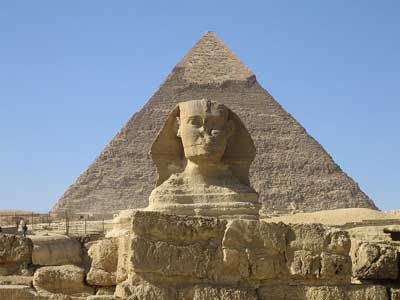
The mysterious Oserion appears to already have been an ancient ruin when it was “uncovered” by Seti I during the construction of the Temple of Abydos in first Dynasty. New developments in the “age-of-the-sphinx” debate. In the Cairo museum is a stella which describes reparations to the great sphinx performed by the Father of the traditionally credited builder. Does the great sphinx conseal its own date of construction in the age of Leo?


..

A growing body of evidence is suggesting a missing chapter in human history. Symbolist author and Egyptologist John Anthony West explores evidence of a sophisticated science behind the unexplainable accomplishments of Ancient Egypt. Was Ancient Egypt the inheritor of a body of scientific and spiritual knowledge from an even earlier civilization?

Author and mathematician Michael S. Schneider discusses organic geometry and the role of the fibonacci number series in growing life. West then demonstrates the presence of the fibonacci series in the stages of construction of the temple of Karnak - also known as the “House of Life”.


..